An updated version of my LinkedIn profile can be found here. In this, I revised my summary, added experience and provided links to my work samples.
An updated version of my LinkedIn profile can be found here. In this, I revised my summary, added experience and provided links to my work samples.

As it so often does, nostalgia came into play when I decided to look back at a movie I’ve long admired for capturing my childish interest. Steven Spielberg’s Hook will be celebrating it’s 25th anniversary this December, two years after the death of beloved actor Robin Williams. Not even being born before the films 1991 release, I considered the young age I must have been when I first viewed the movie fondly, despite that it had scathing review after scathing review.
While I can now notice the slow buildup to where the movie truly starts, I was still struck by the sad reality of what it means to be an adult and, what I suspect to be even worse, a parent. Spielberg’s own fear of being an absentee father shines through, reflecting the attitudes often discussed in parenting today.
While the movie is regarded as one of the worst in Spielberg’s career and didn’t reach the success that was predicted of it, it still has something special to offer. Spielberg himself revealed in an interview that he wasn’t particularly fond of the movie and hopes to find something out of it if he ever happens to rewatch it.
Peter Banning (Robin Williams) is a work obsessed parent who often neglects his children. After leaving Never-Never Land and staying in the real world for too long, he’s lost all of his memories as his former self, Peter Pan. After his children are kidnapped by the revenge seeking Captain Hook (Dustin Hoffman), Peter must return to Never-Never Land to revisit his former life in order to save his kids. It’s a somewhat sad film: the boy who never wanted to grow up becomes the exact version of himself that he had feared.
Even being a bit too long and exposition heavy, running at 144 minutes, Hook is still worth the rewatch. I may have squirmed in my seat waiting for the action to truly begin, but the message that it projected after left me rooting for boy who finally grew up. This new Peter Pan has something special to teach us about what it means to be a parent, even in the modern day.

1. There’s still an imbalance between work and life.
Robin William portrays Peter Banning, a workaholic who attempts to do his best at spending time with his kids, but still falls short of his parenting role by putting his work before his family obligations. Although he goes to his daughter’s school play, he ignores it to accept a phone call during her performance. When he begins running late to his son’s baseball game that he promised to go to, he sends someone to film it until he gets there, but ends up missing the entire game.
It’s tough building a career when you have two young children who demand your attention. Peter’s business oriented career seems like a tough one that requires his constant presence , even when traveling to London to visit Grandma Wendy (Maggie Smith).
The balance between work and life is something we still haven’t quite figured out and the burden it can have on a parent’s relationship with their family can be devastating.

2. We’re glued to our mobile devices.
Exceptional businesses are often the first to adapt new technologies, and when the mobile phone phone was invented, the business world changed forever. This meant that for the first time ever, work could be taken outside.
Your job can now reach you anywhere and for Petter Banning, it does. Day and night, his large, clunky phone is glued to his side so he can answer phone calls no matter the occasion.
Cellular devices have only continued to influence businesses. With the boom in the internet and social media, businesses soon realized how important it is to market yourself online. We spend less time watching TV and more time staring at a tiny computer in our hands. Social media has allowed businesses stay constantly updated and in touch.

3. We don’t value family as much as we think we do.
America is one of three countries that doesn’t offer paid family leave, the other’s being Papua New Guinea and Suriname. This means that taking time off of work to care for you children or a sick loved one can have devastating financial consequences.
Peter can’t even escape from work when travels to London to help dedicate a home for orphans in the name of 90 year old Wendy. Throughout her life, she had taken in and found good homes for orphans, including Peter who had decided to stay in the real world when he fell in love with her granddaughter, Moira (Caroline Goodall.) Peter seems to hold Wendy dear to him, yet he hasn’t visited her in London in about ten years. When business becomes too much for him and he yells at his kids during an important phone call, he remarks that he should have never came to London in the first place.

4. We’re future oriented creatures who often don’t focus on the present.
Frustrated when Peter isn’t valuing his kids as much as his work, Moira tosses Peter’s phone out the window and warns him that he’s waisting the few precious years he has left with his children. “So fast, just a few years. Be careful, you are missing it.”
As humans, it seems we’re constantly striving for success and working to move forward in our careers. Every day there’s a new objective, a new goal. The cliche that time flies by seems to ring more true as we age. Americans have just begun to value what it means to be mindful. Having mindfulness allows you to focus on the here and now instead of blindsiding yourself with the future so much that you forget to cherish what you currently have.

5. Having children can allow you to revisit your inner child again.
Children have a unique imagination and say the most nonsensical things. They can come up with ridiculous games and push you past your energy level. That childlike sense of amazement and being carefree can be refreshing after spending your whole day dealing with reality. Being an adult is hard, sometimes we just need a good excuse to build a fort and make up fairytales.
When Peter finally embraces his own imagination and allows himself to act like a child again, he’s able to hone in on his skills as Peter Pan again and save his children. He comes to value what it means to have that childlike sense of wonder and not take life too seriously. He forms a new bond with his children that’s centered around fun and spending time with them.
Although it’s not a revolutionary film and didn’t have the success that was predicted of it, this reimagining of the Peter Pan classic has value to it that any age can enjoy. For parents, it might be a needed reminder to value the time they have left with their children. Everyone, including Peter Pan, has to grow up sometime.
There isn’t anything new I’ve seen recently, because most of the shows I’ve been watching have ended their seasons.
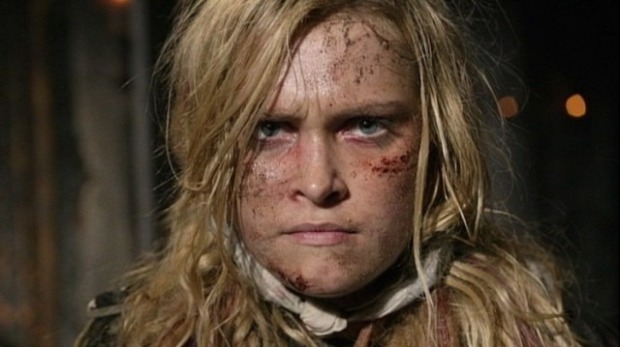
Clarke Griffin, played by Eliza Taylor in CW’s The 100, becomes Wanheda (Commander of Death.)
Television and movies often have no shortage of male characters dominating the screen while one to three leading females are thrown into the mix. Typically, if these women are in positions of power, they’re portrayed as either cold-hearted or are always letting their emotions get the best of them. They may even assert their dominance through cool karate moves from time to time. It seemed there had yet to be a show on television that seamlessly created three-dimensional female characters that were in equal positions of power, or (and this may sound crazy) outnumbered the men in leading roles. That is, until CW’s The 100 premiered in 2014.
Now on its third season, we’ve seen plethora of well rounded female characters who aren’t constrained into acting one way. They’re given a range of emotions and allowed to make mistakes, because they aren’t one character trying to relate to the entire female audience. They aren’t defined by the relationships their in or plagued by sexual violence to make their stories more “interesting.” Best of all: it’s normal and no one seems to question having so many female authority figures. These characters are treated as equals and taken seriously for their ideas and it’s downright refreshing. Here are seven things The 100 can teach us about female leaders
1. They’re capable of strength and tact in unique ways
Clarke Griffin (Eliza Taylor) is a natural born leader who is capable of strategizing a situation and waging war when she deems necessary. She doesn’t rely on magical kong-fu moves to take on her opponent and assert her dominance. Instead, she analyzes what’s in front of her and does her best to come up with a plan that leaves the least amount of blood on her hands, even if it doesn’t always work out that way.
2. Having emotions doesn’t mean they can’t make tough calls.
No simple cold hearted women here needed to lead the people effectively. The 100‘s female characters are often thrust into a variety of heartbreaking situations. A perfect example is in Season 2 when Clarke must decide between releasing the toxic air into Mount Weather, killing everyone including innocent people and children, or letting her friends and mother die in excruciating pain to a few of its inhabitants. She chooses the former to save everyone she cares about. Although the guilt takes a toll on her, she still does whatever she can to protect the ones she loves.
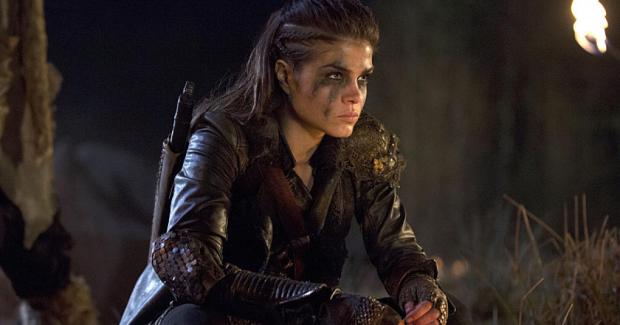
Octavia, played by Marie Avgeropoulus, learns about fighting tactics and transforms herself into grounder.
3. Being weak in the beginning doesn’t mean they can’t grow
Parents aren’t allowed to have more than one child on the Arc, so Octavia Blake (Marie Avgeropoulus) was kept secret by being trapped under a floor for about 16 years. When she’s finally released into freedom she goes a bit wild and is the most childlike one of the group. She often has to be protected and people don’t take her seriously. Instead of keeping Octavia into this one character type, she’s given the ability to develop into a strong willed person. Through the help of Indra (Adina Porter) and Lincoln (Ricky Whittle), she learns how to fight, take care of herself and protect her people.
4. They aren’t defined by their relationships or sexual orientation
Often, women are supporting characters and are there to continue a male characters story line. However, these leading ladies show us that women aren’t simply defined by the relationships that they’re in. When Clarke, Finn (Thomas McDonell) and Raven (Lindsey Morgan) are caught into a love triangle, the writers had the easy opportunity to pit the women against one another and focus the show on that aspect. Instead, feelings are hurt, but there are more important decisions to be made in this world and eventually Clarke makes the difficult decision to mercy kill Finn.
Television also often makes a big deal out of having queer or bisexual characters. Their character’s development is focused almost solely on that aspect, as if it’s their only defining trait. In the world of The 100, the protagonist Clarke is bisexual, but it doesn’t completely define who she is.

Abigail Griffin, played by Paige Turco, tries to juggle being the Arcadians chancellor and doctor.
5. Acknowledging they make not be right for the job doesn’t make them failures
In Season 3, it dawns on Clarke’s mother Abigail (Paige Turco) that she may not be right to handle the job as both chancellor and doctor of the Arcadians. Marcus Kane (Henry Ian Cusick) has grown since Season 1 from being a cold dictator-ish law enforcer, to a caring and understanding leader. Seeing this change in him and how he handles the people of the Arc, she acknowledges that he may be better suited for the job than she is and that’s okay. It doesn’t mean that she’s failed her job, just that someone else may be better suited for it.
6. They have a variety of leadership styles
Lexa (Alycia Debnam-Carey) is the leader of the grounders and guides her people in a different style. She’s been raised and trained in the ways of war and often makes decisions that Clarke doesn’t agree with. In Season 2 when she and Clarke discover that a bomb is going to drop on where their armies have set up camp, Lexa coerces Clarke to slip away and leave the others to die, so as not to give away that they have a spy on the inside of Mount Weather. Lexa also makes a deal to help Clarke save all of their people at Mount Weather. However, when Lexa is offered her people back as long as she doesn’t help Clarke’s team, she takes it offer and betrays the Arcadians.

Lexa, played by Alycia Debnam-Carey, grows as a leader with Clarke and learns that blood must not have blood.
7. Sometimes mercy is the more difficult route
“Blood must have blood” is the common saying among the grounders. They wage war and Lexa strikes down those who defy her. After meeting Clarke, Lexa learns that even though there may be a few who are evil, not everyone deserves to die for their mistakes.
“Our people act as if war is easier than peace. If that’s so, should we not try and achieve the more difficult goal?” Lexa says in Season 3, Episode 5 “Hakeldama.”
Lexa grows into a different type of leader and even forces Clarke to stay true to her word, when she’s presented in a similar situation that would mean the death of someone she hates. These are characters who are presented challenges and are developed throughout seasons. In the world of The 100, female leaders aren’t one and the same. Some are dark while other’s are compassionate, and they have the opportunity to grow as leaders over time. Nonetheless, one thing is certain: they are perfectly capable of calculating a situation no matter what their gender might be.
*I would like to do either 1 or 2. I enjoy the idea of both of them and don’t have a preference over one or the other. I

Fuller House, the Netflix series that reprises the much-loved 1987-95 hit Full House, is a purely nostalgic show. While it tugs at the heartstrings and reminds viewers of familiar times, nostalgia won’t be enough to carry this show completely on its shoulders.
In the original Full House, Danny Tanner (Bob Saget) enlisted the help of his brother-in-law, Jesse (John Stamos), and childhood friend Joey (Dave Coulier) to raise his three daughters after the death of his wife. Fuller House follows Danny’s daughter, D.J. Tanner-Fuller (Candace Cameron Bure), raising her three boys with the help of her sister Stephanie (Jodie Sweeten) and childhood friend Kimmy (Andrea Barber.) Sounds familiar, right?
While many expected the show to be similar to Full House, the plot relies too heavily on the original. It’s a weak gender-swapped spinoff with nothing unique to offer besides incorporating the present world. Even the first episode carries the same title, except with an added word: “Our Very First Show, Again.”
Twenty-nine years later, parenting means prying devices away from children for bonding time and tracking kids through an app because they can’t be trusted. It’s something many of today’s parents can probably relate to, but these issues get brushed away rather quickly in favor of cutesy shticks. D.J’s middle child Max (Elias Harger) has his own catchphrase”Holy chalupas!”and is even at one point buried in a pile of puppies. It’s almost as if the death of the father hasn’t effected the children in any way.
This concept is similar to Girl Meets World (2014), the gender-swapped version of Boy Meets World (1993), which follows Cory and Topanga’s daughter Riley as she learns life lessons. These unoriginal plots feel like nothing more than lazy television, piggybacking off the views of the good old days.
The first episode works hard to incorporate every catchphrase and memory, from Stephanie’s “How rude!” to Jesse serenading his wife Becky with the wedding song he wrote for her, “Forever.” This show has its moments and gives fans the family-friendly antics they’ve missed. Choosing to incorporate clips of the characters in the original show into the intro was a smart choice. It reminds us of exactly why we’re here and what we’re looking forward to.
The impressive recreation of the set masterfully transports viewers back to the Tanner abode, where Danny decides to let D.J. keep the house instead of selling it. After original set drawings in the Warner Bros. archive couldn’t be found, production designer Jerry Dunn had to go through Full House frame-by-frame in order to recreate it perfectly.
However, these aspects alone can’t keep an audience’s attention forever. Nostalgia quickly wears off when it’s coupled with weak comedy. As for those who have never seen the original, there’s nothing interesting to hook them to this new show, perhaps because the idea has been outgrown. Scenes like a dance-off in episode three and D.J. gaining momma bear strength to fight off a Mexican wrestler in episode six, are just few of the many ridiculous examples. However, it’s worth noting that Candace Cameron Bure does her own stunts, despite having a professional stunt double on hand.
Shaky reboots, like this year’s X-Files return, often only take away from the original show’s charm. Spinoffs work best when they can provide a refreshing look at old characters and a few new ones without the need for watching the original (like Better Call Saul). This simply isn’t the case for Fuller House. Let’s just hope the Gilmore Girls reboot doesn’t follow suit.
It was a fun idea, but a show like this would have been better served with a short mini-series reunion, instead of a drawn-out, too-familiar concept. An opportunity to explore the new lives of the Full House family arose, but that opportunity has been thwarted by too much of the same-old, same-old.

NEW YORK – SEPTEMBER 13: New York Times Fashion Critic Cathy Horyn attends Mercedes-Benz Fashion Week at Bryant Park on September 13, 2009 in New York City. (Photo by Katy Winn/Getty Images)
Cathy Horyn is 59 years old and has become one of the most feared and respected fashion critics of all time. She graduated with a master’s degree in journalism from Northwestern University and started her career as a fashion critic in 1986, when she wrote for The Detroit News. Prior to that, she covered news on courts and education systems for the Associated Press in Chicago and the Virginia Pilot. Horyn was also a contributing editor for Vanity Fair and from 1990 to 1994, she covered fashion for The Washington Post. Throughout her career, Horyn also contributed to the publications such as Vogue, The International Herald Tribune and Harper’s Bazaar.
In 1999, Horyn became the second fashion critic for The New York Times and started one of the first fashion blogs “On the Runway.” Horyn worked at The Times for 15 years, but resigned in February 2014 to care for her partner. Her time working at the newspaper set her career as fashion critic apart from everyone else, with her honest reviews of high profile designers. She’s known for her extreme critiques of the fashion industry and she isn’t afraid to make people angry. Horyn is now the critic-at-large for The Cut at nymag.com
Horyn has had publicized backlash from designers such as Giorgio Armani and Oscar de la Renta and has even been banned from a few shows. She is no longer welcome to the fashion shows up Dolce & Gabbana, Carolina Herrara, Nicole Miller, Giorgio Armani, and Saint Laurent. Even Lady Gaga wrote a piece against her for V Magazine when Horyn wrote about the superstar “As funny and as fresh as Gaga was in her speech at the recent C.F.D.A. awards, she looked embalmed in the black Versace harness, and I don’t know why Donatella Versace said she was honored by Gaga’s selection, unless, of course, she thought she had to say something nice about the superstar.”
Harsh words, and Gaga wasn’t too pleased with it. In V Magazine, Gaga wrote “Doesn’t the integrity of the critic become compromised when their writings are consistently plagued with negativity? When the public is no longer surprised or excited by the unpredictability of the writer, but rather grown to expect the same cynicism from the same cynic?”
Despite this, Horyn hasn’t let it faze her or stop her career. In fact, she continues to have supportive followers and in 2001 she received the prestigious Eugenia Sheppard Award for fashion writing from the Council of Fashion Designers of America.
As for being banned from shows, I doubt she could care less. In an interview with Business of Fashion, she said, “First of all, I should say I don’t go to a lot of shows, not nearly as many as the other people do, because I only want to write about the newsmakers. I don’t want to feel like I have to go, believe me I’ve done that. But when you’re seeing these collections, season after season, you can sit at a show and know in a heartbeat what’s new, what’s striking, what’s newsworthy.” A full list from 2007 to 2012 of her feuds can be found here.
Honesty can be brutal at times, and Horyn’s writing shows this best. She isn’t afraid to give her opinion, even if it isn’t a popular one or if a friend of her’s is the work she is critiquing. She’s doesn’t tip toe around what she likes or dislikes. There’s a clear sense of how she feels about a designer in her writing, which is why she has come to be the most feared critic.
A pieces of her writing that I have enjoyed are:
1. Relax, Kayne: You’ve Won Fashion, Music, Everything

Yeezy Season 3
“He wears everything on his sleeve, his ego as well as his innocence. He even shared a clip from a video game he had created of his mom entering the gates of Heaven. The imagery was utterly banal, though the impulse was one many a loving son can probably identify with — Mom transformed into a rocket ship blasting into the big blue beyond.
But, in the end, I just wanted to tell Mr. Kanye West: Shut up. Relax. You have won.”
2. Changing My Mind About Marc Jacob’s Grunge Collection

“More than 20 years on, I find myself questioning my own reaction to the show, the violet-scented peevishness of my tone. Writing in the Washington Post, I complained about its “lack of credibility” while tutting, “Rarely has slovenliness looked so self-conscious, or commanded so high a price.” I ignored, if I even considered, the charm and sweetness of the attitude — an attitude, by the way, which I happily embraced in my own brand of slob appeal.”
3. Marc Jacob’s Grand History of Power

“The Marc Jacobs show was a plea to step away from the runway rat race and Instagram hustle, and take time to seriously consider things.” – Cathy Horyn (Photo: Imaxtree)
“Even though Jacobs’s show contained many historical shapes — silk robes and visiting dresses that might have been from around 1900, full skirts from the ’50s, poufy ball gowns and furs from the glitzy ’80s — it was no more a trip down memory lane than Saillard’s pieces were. If anything, the Jacobs show was a plea to step away from the runway rat race and Instagram hustle, and take time to seriously consider things. A possible clue to his intentions was the lack of music: the models, on towering platforms, walked just to the chime of single, irregularly repeated bell tones. The shoes were another clue. Not only did they make already tall women seem ridiculously tall, but they also made them seem quite wispy, as if they might blow away.”

